Madhyamaheshwar Trek – A Panch Kedar Pilgrimage Through the Garhwal Himalayas scenery landscape background

Madhyamaheshwar Trek – A Panch Kedar Pilgrimage Through the Garhwal Himalayas

Trek through pristine alpine meadows and dense oak forests to reach the sacred fourth temple of Lord Shiva, set against the towering peaks of Chaukhamba.

🏔️ Sacred Pilgrimage Trails

Trek Overview

Deep in the Rudraprayag district of Uttarakhand, past the last motorable road, past the last village, and past the treeline — there is a stone temple that has stood for thousands of years in the middle of a wide green meadow. Around it: Shivling (6,543m), Kedarnath Peak (6,940m), Chaukhamba (7,138m), Neelkanth (6,596m), and Meru — all visible at once, all enormous, all close.

This is Madhyamaheshwar — the second temple of the sacred Panch Kedar circuit, dedicated to Lord Shiva. Situated at 3,497 metres above sea level, it is where the navel (nabhi) of Lord Shiva's divine bull form is worshipped. The trek to reach it from Ransi village covers approximately 24 km one way through the Kedarnath Wildlife Sanctuary — past ancient oak and rhododendron forests, rushing Himalayan streams, traditional Garhwali stone villages, and finally, a high open bugyal (alpine meadow) that delivers one of the most breathtaking panoramas in the entire Garhwal range.

The Madhyamaheshwar trek is not widely marketed. It is not overcrowded. It does not have cable cars or paved approach roads. What it has is everything a Himalayan trek should have — genuine wilderness, genuine spiritual significance, and views that stay with you long after you're back in the plains.

This 5-day guided package departs from Rishikesh and includes everything — transport, accommodation, meals, guide, and forest entry permits.

📅 Route Progression Schedule

Madhyamaheshwar Trek — 5-Day Itinerary from Rishikesh

📍 Day 1 — Rishikesh to Ransi Village (Drive)

Drive Distance ~210 km
Drive Time 8–10 hours
Altitude Shift 372m → 1,800m
Difficulty Easy — Drive
Overnight Stay Guesthouse / Ransi

Depart Rishikesh early morning — 5:30 AM is ideal. The drive to Ransi is long but rewarding. The road passes through Devprayag, the sacred confluence of the Alaknanda and Bhagirathi rivers where the Ganga is officially born — worth a 15-minute stop. From there you continue through Rudraprayag, then south toward Ukhimath where the winter deity of Kedarnath resides at the Omkareshwar Temple (an important stop for pilgrims — worth a brief darshan).

From Ukhimath, the road climbs and narrows as it heads 30 km to Ransi village — the last point of motorable access and the starting point of the trek. Arrive by late afternoon. Check into your guesthouse, have an early dinner, and rest. Tomorrow's trek is 13 km and you need your energy.

Highlights en route:
  • Devprayag sangam — Alaknanda meets Bhagirathi
  • Rudraprayag — confluence of Alaknanda and Mandakini
  • Omkareshwar Temple, Ukhimath — Shiva temple and winter seat of the Kedarnath deity
  • Ransi village — local Garhwali homes, simple market
Road drive from Rishikesh to Ransi village through Rudraprayag Garhwal Himalayas Uttarakhand

Day 1 Segment

Overland Mountain Transit

📍 Day 2 — Ransi to Gaundhar (Trek Day 1)

Trek Distance 13 km
Time Required 5–7 hours
Altitude Shift 1,800m → 2,250m
Difficulty Moderate — Gradual
Overnight Stay Teahouse / Gaundhar

Start before 7:30 AM. This is the longest day of the trek in distance, but the altitude gain is gradual — a forest walk more than a climb, with the Madmaheshwar Ganga river accompanying you for much of the route.

The trail begins through the fields and stone-roofed houses of Ransi village, then descends slightly through Gangi village (~3 km) before entering the dense forest zone of the Kedarnath Wildlife Sanctuary. Once inside the sanctuary, the trail narrows, the forest deepens, and the noise of the outside world fades completely. Tall oak trees, rhododendron canopy, and small waterfalls crossing the trail create one of the most beautiful forest walks in the Garhwal Himalaya.

Watch for wildlife in this section — the sanctuary is home to Himalayan monal pheasants, barking deer, langurs, and if you're very lucky, you may spot prints or a fleeting glimpse of the endangered Himalayan musk deer in the undergrowth.

The trail emerges from deep forest at Bantoli (~10 km), a small settlement with basic teahouses and a brief rest stop. From Bantoli, a short 3 km walk brings you to Gaundhar village — your overnight stop.

Highlights:
  • Entry into Kedarnath Wildlife Sanctuary
  • Madmaheshwar Ganga river valley walk
  • Gangi village — traditional Garhwali stone architecture
  • Bantoli waterfall — 100 ft cascade of Madmaheshwar Ganga
  • 🐾 Wildlife: Himalayan Monal, barking deer, langurs, musk deer (rare)
Forest trail through oak and rhododendron trees in Kedarnath Wildlife Sanctuary Madhyamaheshwar trek

Day 2 Segment

Wilderness Sanctuary Trail

📍 Day 3 — Gaundhar to Madhyamaheshwar Temple (Trek Day 2)

Trek Distance 11 km
Time Required 6–8 hours
Altitude Shift 2,250m → 3,497m
Altitude Gain ~1,247m (Hard)
Overnight Stay Guesthouse / Tents

This is the hardest day and the most rewarding. Start by 6:00–6:30 AM.

The trail from Gaundhar climbs steeply from the first hour through thinning birch and rhododendron forest. The ascent is sustained and demanding — take it steadily, drink water regularly, and do not rush. The forest gradually thins as you gain altitude. Small alpine flowers begin appearing between the rocks. Streams become clearer, colder, and faster.

At approximately 3,200m, something extraordinary happens. The treeline breaks. The forest ends without warning. And in front of you: the Madmaheshwar bugyal — a wide, impossibly green alpine meadow stretching to the sky, with the entire Himalayan skyline laid out from horizon to horizon. Shivling, Kedarnath Peak, Chaukhamba I through IV, Neelkanth, Meru, Kedarnath Dome — all visible simultaneously, with nothing between you and them.

The Madhyamaheshwar temple sits right in the middle of this meadow — a small, ancient stone structure that has stood here since the time of the Pandavas, completely unbothered by how extraordinary its surroundings are.

Attend the evening aarti at the temple. At 3,497 metres, in this silence, with these peaks watching from every direction — it is unlike any temple experience you have had from a road.

Highlights:
  • The sustained forest climb — demanding and beautiful
  • Crossing the treeline — the most dramatic moment of the trek
  • First view of the Chaukhamba massif
  • Madmaheshwar bugyal in full glory
  • Madhyamaheshwar Temple darshan
  • Evening aarti at 3,497m
Madhyamaheshwar Temple in alpine meadow bugyal with Chaukhamba peaks visible Garhwal Himalayas

Day 3 Segment

High Alpine Meadow Bugyal

📍 Day 4 — Budha Madhyamaheshwar Visit + Descent to Bantoli

Morning Tour 3 km round trip
Descent Distance 11 km back
Altitude Shift 3,497m→3,583m→2,000m
Time Required 6–7 hours
Overnight Stay Teahouse / Bantoli

Rise before 4:30 AM and leave for Budha Madhyamaheshwar — the upper shrine, 2–3 km above the main temple at 3,583m. Arrive by 5:30 AM for sunrise.

What you see from Budha Madhyamaheshwar is the finest mountain panorama on this entire route. Shivling, Kedarnath, all four Chaukhamba peaks, Satopanth, Neelkanth — all simultaneously visible in a 360° sweep from a point that barely reaches 12,000 feet. There is a small sacred pond here whose still water reflects the Chaukhamba peaks at dawn — one of the most photographed and most deserved images in the Garhwal Himalaya. Do not skip this.

After the sunrise and Budha Madhyamaheshwar darshan, return to the main temple complex for breakfast and then begin the descent. The downward trail is significantly easier, but take care on the steep upper sections — knees feel every step on the descent. Reach Bantoli by early evening for overnight rest.

Highlights:
  • Sunrise over Chaukhamba from Budha Madhyamaheshwar (3,583m)
  • 360° panorama — the finest view of the entire trek
  • Sacred reflection pond at Budha Madhyamaheshwar
  • Long descent through forest and river valley
Sunrise view of Chaukhamba peaks from Budha Madhyamaheshwar at 3583m Uttarakhand Himalaya

Day 4 Segment

High Ridge Sunrise Sweep

📍 Day 5 — Bantoli to Ransi + Drive back to Rishikesh

Trek Distance 10 km (Descent)
Drive Distance ~210 km
Altitude Shift 2,000m → 1,800m
Time Required Trek 4h + Drive 8-10h
Difficulty Easy — Descent

Start the final descent by 7:00 AM. The 10 km walk from Bantoli back to Ransi is a pleasant morning of familiar forest trail — knowing these trees and this river by now, the return has a different quality to it. Reach Ransi by early afternoon.

Board the vehicle for the return drive to Rishikesh via Ukhimath, Rudraprayag, and Devprayag. Arrive Rishikesh by evening. End of trek.

🏁

Expedition Complete: Journey returns safely to terminal base at Rishikesh.

Trekkers descending through forest trail from Bantoli to Ransi Madhyamaheshwar trek return day

Day 5 Segment

Final Descent & Out-Transit

💰 Transparent Tariff

Trek Package Price — ₹11,000 per person

What's Included

Return transport from Rishikesh to Ransi and back (shared vehicle)
4 nights accommodation (guesthouse/homestay at Ransi, Gaundhar, Bantoli; tent/guesthouse at temple)
All meals: 4 breakfasts + 4 dinners + 4 lunches during trek days
Experienced local trek guide throughout
Forest entry permit — Kedarnath Wildlife Sanctuary
Porterage for group equipment (tents, cooking gear)
First aid kit
RideRishikesh trek coordinator reachable on WhatsApp throughout

What's Not Included

5% GST (applicable on the package price)
Personal trekking gear — shoes, backpack, raincoat, warm clothing
Personal porter (available on request at additional cost)
Travel insurance
Meals during road journey (Day 1 and Day 5 drives)
Pony or palki services (available at Ransi if needed)
Any temple donation or personal puja
Emergency evacuation costs (due to bad weather, medical emergency, etc.)
Anything not listed under inclusions
🕉️ Sacred Lore & Heritage

Mythology and Cultural Significance of Madhyamaheshwar

The Panch Kedar Legend

The Madhyamaheshwar temple holds its place in one of Hinduism's most powerful pilgrimage legends. After the Kurukshetra war in the Mahabharata, the Pandavas sought forgiveness from Lord Shiva for the sin of killing their own kin. Shiva, unwilling to grant them easy absolution, fled to the Garhwal Himalayas and disguised himself as a bull (Nandi) among the cattle of the local villagers.

When Bhima, the second Pandava, recognised the bull as Shiva, Shiva dove into the earth to escape. As he disappeared, different parts of his body emerged at five different locations — and these five locations became the Panch Kedar:

🔱 Kedarnath The Hump
(prishtha bhag)
🔱 Madhyamaheshwar The Navel
(nabhi)
🔱 Tungnath The Arms
(bahu)
🔱 Rudranath The Face
(mukha)
🔱 Kalpeshwar The Hair
(jata)

At Madhyamaheshwar, it is the navel of Shiva's bull form that is worshipped — in the form of a navel-shaped Shivalinga inside the ancient stone temple. It is said that Bhima himself built this temple as an act of devotion.

The Temple

The Madhyamaheshwar temple is a modest stone structure in the Nagara architectural style typical of Garhwal's ancient shrines. Inside are three main shrines — the principal Madhyamaheshwar Shivalinga, a small temple dedicated to Goddess Parvati, and a shrine of Ardhanarishvara (the half-Shiva, half-Parvati form). The evening aarti is attended by the priest and often joined by local villagers and trekkers — intimate, simple, and powerful.

Temple Opening & Closing

The Madhyamaheshwar temple follows a seasonal schedule based on the Hindu lunar calendar:

🌱
Opens May (usually around Akshaya Tritiya — exact date changes annually)
🍂
Closes November (around Diwali)
❄️
Winter Deity Seat Omkareshwar Temple at Ukhimath
📅

Note: Always verify the exact opening date for the current year before booking. We'll keep you updated when you WhatsApp us.

Get Date Updates
🌲 Sanctuary Ecosystems

Flora & Fauna on the Madhyamaheshwar Trek

The entire Madhyamaheshwar trail passes through the Kedarnath Wildlife Sanctuary — 975 sq km of protected Himalayan terrain, the largest protected area in the western Himalayas, and one of India's most important biodiversity zones.

The vegetation changes dramatically as you gain altitude, from subtropical to subalpine:

🌲 Trees:

Deodar Cedar, Himalayan Oak, Birch (Bhojpatra), Rhododendron (Buransh), Chestnut, Pine, Fir, Spruce

🌸 Flowers & Alpine Plants:
  • Rhododendron (blazing red in spring, March–April)
  • Brahma Kamal (Saussurea obvallata) — Uttarakhand's state flower, found near the temple meadow
  • Himalayan Blue Poppy, Cobra Lily (Arisaema), Aconitum (Monkshood)
  • Wild primula and Alpine asters in the bugyal
  • Medicinal herbs including Jatamansi and Atees
Himalayan Monal pheasant in Kedarnath Wildlife Sanctuary on Madhyamaheshwar trek trail Uttarakhand

Avian Species

Himalayan Monal Habitat

⛰️ Bugyals (Alpine Meadows):

The Madmaheshwar bugyal near the temple is one of the finest high-altitude meadows in the Garhwal Himalaya — carpeted in green from June through September.

🐾 Mammals Network Directory
Musk Deer: Himalayan Musk Deer — sanctuary's most protected species; elusive but occasionally spotted in dense forest sections
High Altitude: Himalayan Tahr, Himalayan Black Bear, Snow Leopard (very rare sighting)
Predators & Foxes: Common Leopard, Red Fox
Primates & Martens: Yellow-throated Marten, Common Langur
Ungulates: Barking Deer (Muntjac)
🦅 Avian & Bird Records

Himalayan Monal (Danphe) — the most colourful bird on the trail, often spotted near the treeline. Koklass Pheasant, Kalij Pheasant, Golden Eagle, Bearded Vulture (Lammergeier), Snow Pigeon, Himalayan Rubythroat, Woodpecker species. Various warblers and flycatchers in the forest section.

📸

Birdwatcher's tip: The forest section between Ransi and Bantoli is the best birding stretch. Early morning on Day 2 gives the highest chance of Himalayan Monal sightings.

☀️ Climate & Planning Calendar

Best Time for the Madhyamaheshwar Trek

January–February

Temple closed. Heavy snow on trail.

❌ No
March

Temple closed. Snow still present above 2,500m.

❌ No
April

Temple closed. Snow melting. Trail muddy.

❌ No
May (post-opening)

Temple opens (~mid-May). Rhododendron blooms. Slightly unpredictable weather.

✅ Yes
June

Best weather window. Bright skies, lush green trail.

✅ Best
July–August

Monsoon. Heavy rain. Slippery trails, landslide risk on approach road.

⚠️ Avoid
September

Post-monsoon clarity. Clear mountain views. Less crowded.

✅ Best
October

Excellent — stable weather, golden meadows, exceptional peak visibility.

✅ Best
November

Temple closes (Diwali period). Last chance window — goes fast.

⚠️ Limited
December

Temple closed. Trail inaccessible due to snow.

❌ No
💡

Our recommendation: September–October offers the best overall experience — stable weather, extraordinary mountain visibility, cooler temperatures, and fewer crowds than the June rush.

🗺️ Arrival & Routing Vectors

How to Reach Madhyamaheshwar (From Rishikesh)

💡

Note: If you book with RideRishikesh, all transport is arranged as part of the package.

✈️ By Air:

Nearest airport — Jolly Grant Airport, Dehradun (~35 km from Rishikesh). Flights from Delhi, Mumbai, Bangalore.

🚂 By Train:

Rishikesh Railway Station is the nearest railhead. Direct trains from Delhi (Haridwar/Rishikesh route).

🚗 By Road (Rishikesh to Ransi):
~210 km 8–10 hours
Rishikesh Devprayag Rudraprayag Ukhimath Ransi
🥾 Trek Route: Ransi to Madhyamaheshwar Temple
One-way: ~24 km Return: ~48 km
Ransi 1,800m
Gangi Trail Node
Bantoli 2,000m
Gaundhar 2,250m
Madmaheshwar Temple 3,497m
🎒 Equipment & Logistics Compliance

What to Pack for the Madhyamaheshwar Trek

🧥 Clothing & Footwear
  • Full-sleeve thermal base layer (essential even in summer — nights are cold above 3,000m)
  • Fleece jacket or woollen sweater
  • Windproof/waterproof outer jacket
  • Quick-dry trekking pants (2 pairs)
  • Warm cap and gloves
  • Waterproof poncho or rain jacket
  • Sun cap for daytime
  • Sturdy trekking/hiking shoes with ankle support (non-negotiable)
  • Camp sandals/slippers for evenings
  • Woollen or thick trekking socks (3–4 pairs)
⚙️ Backpack & Gear
  • Day backpack 30–40 litres with rain cover
  • Trekking poles (highly recommended for the steep Day 3 ascent and descent)
  • Headlamp with spare batteries
  • Refillable water bottle (1 litre minimum — single-use plastic is banned in the sanctuary)
  • Water purification tablets
🩺 Health & Safety
  • Personal medicines (altitude sickness, pain relief, anti-diarrheal, band-aids)
  • ORS sachets
  • Sunscreen (SPF 50+) and lip balm
  • Hand sanitiser
  • Original government photo ID (Aadhaar / Passport / Voter ID)
  • Photocopy of ID
  • Trek permit (arranged by RideRishikesh)
🛑 Important — What NOT to Bring
Banned Plastics Single-use plastic bottles or bags (banned in Kedarnath Wildlife Sanctuary)
Alcohol Restrictions Alcohol (high altitude + alcohol increases AMS risk significantly)
Media Equipment Heavy camera equipment (every extra kg matters on Day 3)
Weight Target More than 12–15 kg total pack weight
🗺️ Regional Landmarks & Extensions

Nearby Attractions

⛰️ Budha Madhyamaheshwar 3,583m

Budha Madhyamaheshwar (3,583m) — 2–3 km above the main temple. The finest viewpoint of the entire trek. Included in our Day 4 itinerary.

🌊 Deoria Tal ~45 km away

Deoria Tal — a sacred lake in the Garhwal Himalayas, ~45 km from Madhyamaheshwar. The reflection of Chaukhamba in its still waters is iconic.

🏕️ Chopta ~30 km away

Chopta — the "Mini Switzerland of Uttarakhand," ~30 km away. Base for the Tungnath–Chandrashila trek.

🛕 Tungnath Temple 3,680m

Tungnath Temple (3,680m) — the third Panch Kedar and the highest Shiva temple in the world. Accessible from Chopta.

🔱 Kalimath Temple ~30 km Peetha

Kalimath Temple — one of the 108 Shakti Peethas, ~30 km away.

❄️ Omkareshwar Temple, Ukhimath Winter Seat

Omkareshwar Temple, Ukhimath — winter abode of the Kedarnath deity. An important stop on the drive to Ransi.

🧗 Kanchani Tal 6 km Route

Kanchani Tal — a difficult-grade 6 km extension trek from Madmaheshwar for experienced trekkers.

🏹 Kedarnath Trek ~70 km away

Kedarnath Trek — the first and most famous Panch Kedar, accessible from Gaurikund (~70 km from Ransi).

📋 Overview & Facts

Quick Facts Matrix

Madhyamaheshwar Circuit Parameters

All-Inclusive Package Price ₹11,000 / per person
🏔️
🟢 Trek Grade Moderate
📈 Max Altitude 3,583m (Budha Madhyamaheshwar)
🛕 Temple Altitude 3,497m / 11,473 ft
🏡 Base Village Ransi Village, Ukhimath
🗺️ One-Way Distance ~24 km (Ransi to Temple)
🔄 Total Trek Distance ~48 km round trip
Duration 5 Days / 4 Nights
📍 Starting Point Rishikesh
🍂 Best Time May–June, September–October
🌿 Trek Type Pilgrimage + Nature Trek
🌲 Forest Area Kedarnath Wildlife Sanctuary
🔱 Panch Kedar Position 2nd Kedar
📲 Book Now
💬 Transparency Hub

Frequently Asked Questions — Madhyamaheshwar Trek

Ask on WhatsApp
A1: Madhyamaheshwar Temple is situated at 3,497 metres (11,473 feet) above sea level. The optional Budha Madhyamaheshwar viewpoint above the temple reaches 3,583 metres.
A2: The trek is rated moderate. It is suitable for beginners with a reasonable level of physical fitness — particularly the ability to walk 10–13 km per day on forest trails. The Day 3 ascent from Gaundhar to the temple is the hardest section, with around 1,247m of altitude gain in 11 km. Preparation — daily walking and stair climbing for 3–4 weeks before — is strongly recommended.
A3: The one-way distance from Ransi village to Madhyamaheshwar Temple is approximately 24 km. The complete round trip is approximately 48 km, trekked over Days 2–5 of our 5-day package. Adding the Budha Madhyamaheshwar extension makes the total approximately 51 km.
A4: The temple generally opens in mid-May (around Akshaya Tritiya) and closes in early November (around Diwali). Exact dates follow the Hindu lunar calendar and change slightly each year. During the closed season, the deity is worshipped at Omkareshwar Temple in Ukhimath. Contact us on WhatsApp for the current year's exact dates.
A5: The package includes return transport from Rishikesh, 4 nights accommodation, all trek meals (breakfast + lunch + dinner on trek days), an experienced local guide, Kedarnath Wildlife Sanctuary forest entry permit, group equipment porterage, and first aid. See the full inclusion list above.
A6: The trek reaches 3,497–3,583m, which is high enough for mild Altitude Mountain Sickness (AMS) to affect unacclimatized individuals. Symptoms include headache, nausea, and fatigue. Walking slowly, staying well-hydrated, avoiding alcohol, and not rushing the ascent significantly reduces the risk. Our 5-day itinerary is paced to allow gradual acclimatization. If you have any pre-existing heart or respiratory conditions, consult your doctor before booking.
A7: Yes. Ponies and porters are available for hire at Ransi village. These can carry luggage or carry passengers who have difficulty walking. This is not included in the package price but can be arranged locally.
A8: The temple remains open during monsoon, but the trail becomes significantly more challenging — slippery paths, leeches in the forest section, heavy rain, and occasional landslides on the approach road. We strongly advise against monsoon trekking on this route for first-time trekkers.
A9: Budha Madhyamaheshwar is a smaller upper shrine located approximately 2–3 km above the main temple at 3,583m. It offers a 360° unobstructed view of the surrounding Himalayan peaks including all four Chaukhamba summits, Shivling, and Kedarnath. It is the finest panoramic viewpoint on the entire trek. We include this as a sunrise excursion on Day 4 — it is absolutely worth the early start.
A10: Send us a WhatsApp message on +91 76682 30086 with your preferred travel dates and group size. We'll confirm available departure dates, answer any questions, and share booking and payment details. A partial advance is required to confirm your spot.
⭐ Trekker Feedback

What Our Trekkers Say

✍️

Verified Review Feed

(Testimonials and reviews to be added here — Google Reviews / WhatsApp review cards)

⚡ Direct Reservation Channel

Ready for the Madhyamaheshwar Trek?

The Madhyamaheshwar trek is one of the most spiritually and visually rewarding treks in the Garhwal Himalaya — and one of the least crowded. We run guided departures from Rishikesh with small groups, experienced local guides, and everything taken care of.

Package Price: ₹11,000 per person (inclusive of transport, accommodation, meals, guide, permits)
Rishikesh
ऋषिकेश
🛵 Your Adventure Is Moving

Explore at Your Own Pace

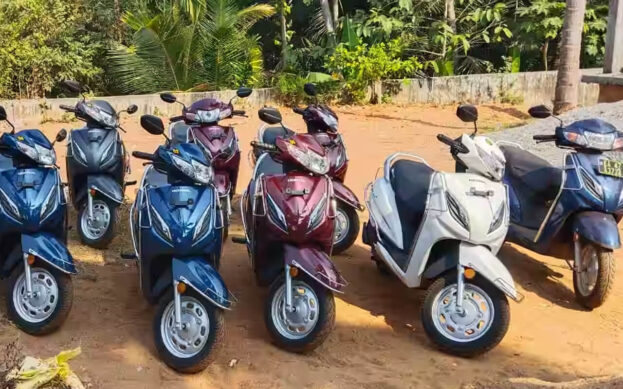
Premium scooty rent rishikesh self drive vehicle accelerating beautifully across tracking viewport dimensions