The Nag Tibba trek in Uttarakhand gets underestimated constantly. People assume that because it’s labelled “easy to moderate” and doable in a weekend, it must be a nothing trail. It isn’t. At 3,022m (9,915 ft), the summit sits above most of Uttarakhand’s popular hill stations, gives you a clean line of sight toward Bandarpunch, Kedarnath, and on a good morning, Swargarohini and the trail through dense oak and rhododendron forest is one of the better walks in the Jaunpur range. This guide covers the route from Delhi and Dehradun, distance and elevation, what season to go, gear, and the practical logistics most posts skip.
Nag Tibba Trek Distance, Elevation, and Difficulty

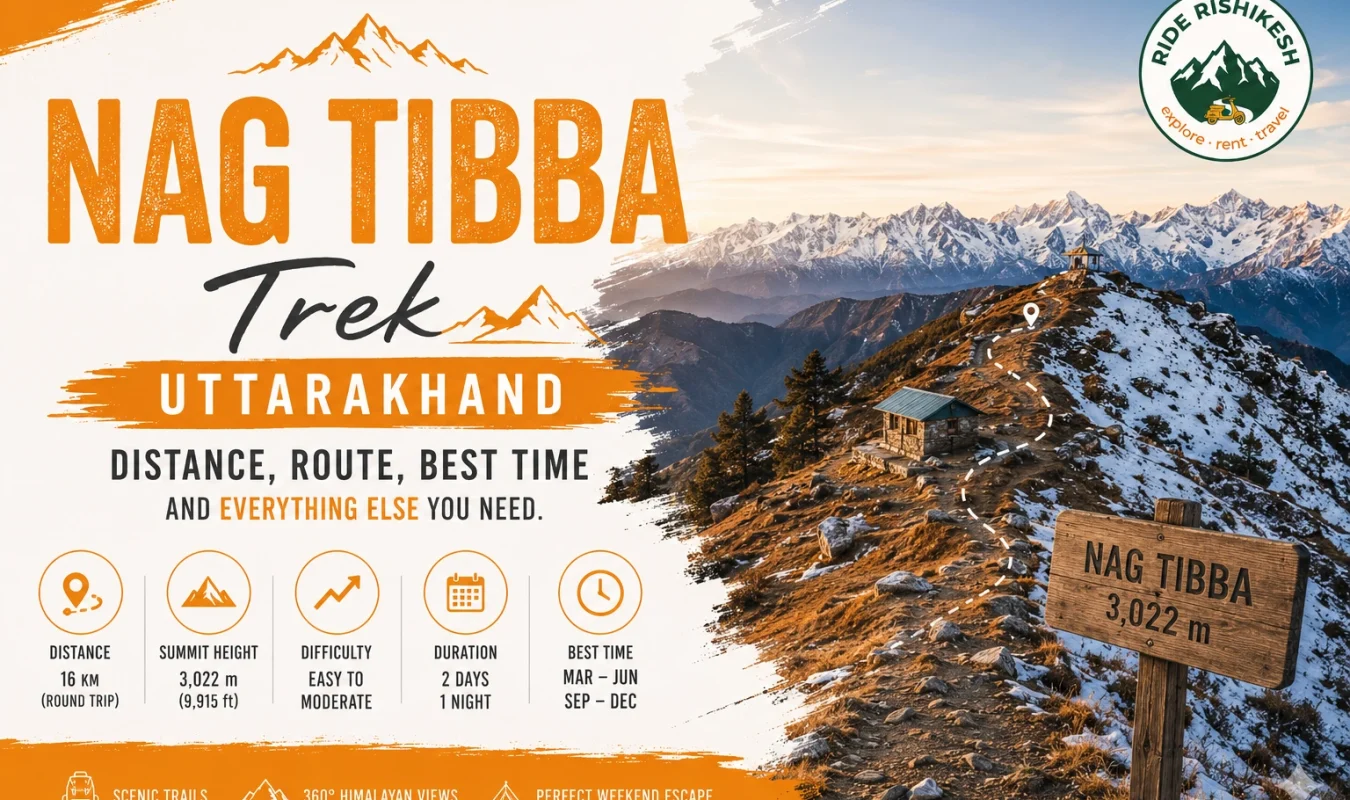
Summit height: 3,022m (9,915 ft)
Trail distance: 16 km round trip (8 km ascent from Pantwari base camp, 8 km return)
Elevation gain: Approximately 1,300m from the base village of Pantwari (1,720m)
Duration: 2 days, 1 night though fit hikers do it in a single long day
Difficulty: Easy to moderate
The ascent from Pantwari is mostly forested trail with a steady gradient. There are no technical sections, no glacier crossings, no exposed ridgelines that require scrambling. The trail steepens noticeably in the final 2 km before the summit meadow, but it’s a walking trail throughout.
What makes it feel hard if you’re underprepared: the elevation gain is continuous. There’s no flat reprieve in the middle section. If you’re going in winter (December–February), factor in snow from roughly the 2,500m mark which slows pace considerably and changes what you need to carry.
Best Time to Do the Nag Tibba Trek
Nag Tibba is one of the few Uttarakhand treks that works across multiple seasons — but each has a different character.
October to November is the most reliable window for clear summit views. Post-monsoon skies are sharp, the forest is still green from the rains, temperatures are cool but not cold at altitude, and the trail isn’t icy. This is the sweet spot.
December to February is the winter trek the main draw being snow on the summit and upper trail. It’s genuinely beautiful and the crowds are minimal. Temperatures at the top drop to -5°C to -10°C overnight. You need proper insulation layers, microspikes or crampons if there’s thick ice, and a four-season sleeping bag if you’re camping rather than homestay. Don’t go in winter without checking recent snow conditions the trail from Pantwari upward can close after heavy snowfall.
March to April offers light snow at the top with warmer daytime temperatures. Rhododendrons bloom on the lower forest section from late March. Good option if winter feels too committing.
July to September (monsoon) — covered separately in the monsoon treks guide is viable because the trail stays forested and has no river crossings. The forest turns intensely green and there’s almost no one else there. The tradeoff is leeches in the lower sections and cloud cover that often obscures summit views.
Avoid: late April to June. Temperature is fine, but haze from the plains kills the long-range views that make the summit worthwhile.
How to Reach Nag Tibba Base Camp from Delhi and Dehradun
The base for the Nag Tibba trek is Pantwari village, 58 km from Dehradun via the Mussoorie–Chamba route.
From Delhi
By bus (cheapest): Take a Volvo or AC sleeper bus from Kashmere Gate ISBT to Dehradun — they leave from around 9pm and reach Dehradun by 5–6am. From Dehradun ISBT or Mussoorie bus stand, shared jeeps/taxis to Chamba run regularly (roughly 2 hours). From Chamba, Pantwari is 18 km — shared jeeps are available but limited; a local taxi (₹500–600) is easier.
By train: The Jan Shatabdi (New Delhi to Dehradun, ~5.5 hours) is comfortable and on time most days. From Dehradun station, same onward route as above.
By car: Delhi to Dehradun is 280 km via NH58 (Haridwar bypass route) — around 5–6 hours depending on traffic. Then Dehradun to Pantwari is 58 km, roughly 2 hours on winding hill roads.
From Dehradun
If you’re basing in Dehradun or arriving from Rishikesh, the route is:

Dehradun → Mussoorie → Kempty Falls → Chamba → Pantwari
Total road distance is 58 km and takes 1.5–2 hours. The Dehradun–Mussoorie section is busy on weekends; leave before 8am if possible.
From Rishikesh, Chamba is about 50 km via the Devprayag road a different and actually faster route than going through Dehradun. If you’ve rented a scooty in Rishikesh, you can ride to Chamba and arrange a local jeep for the final 18 km to Pantwari, which saves both time and overnight transport cost.
Gear List for Nag Tibba Trek — Summer vs Winter
The gear difference between a summer/autumn Nag Tibba trek and a winter one is significant enough to list separately.

For October–November (autumn):
- Day pack (25–30L)
- Trekking shoes — ankle support, not trail runners
- 2–3 base layers, one mid-layer fleece
- Wind/rain jacket — even in October, summit wind is cold
- Trekking poles — optional on the ascent, genuinely useful on the descent
- 2L water minimum (no reliable water on the upper trail)
- Headlamp if doing early morning summit start
Additional for December–February (winter):
- Insulated down jacket (600-fill minimum)
- Thermal base layers (top and bottom)
- Waterproof gloves and a warm hat that covers ears
- Microspikes not always needed, but worth carrying from December
- Four-season sleeping bag if you’re camping; most homestays at Pantwari provide blankets but they’re not always warm enough in deep winter
- Gaiters if you’re expecting deep snow
Footwear note: People regularly underestimate this. Regular sports shoes work in October but not in winter. The descent in wet or icy conditions on leather-soled shoes is where most injuries happen on this trail. Invest in proper waterproof trekking shoes or rent a pair in Rishikesh or Mussoorie before you head up.
Book Your Rishikesh Transport for Nag Tibba
If you’re starting from Rishikesh, the Chamba route via the Devprayag road is your cleanest option and at RideRishikesh, we can sort out your onward transport from Rishikesh to the trailhead so you’re not piecing together connections at 5am.
Message us on WhatsApp with your dates and we’ll confirm what’s available.
Frequently Asked Questions
Is Nag Tibba trek safe for beginners?
Yes — it’s one of the better-suited Uttarakhand treks for beginners, specifically because the trail is well-defined, the route is short enough to complete in a day if needed, and there are no technical sections requiring scrambling or river crossings. The main requirement is basic fitness for a sustained 8 km uphill walk with 1,300m elevation gain. In winter, snow adds difficulty and beginners should ideally go with an experienced guide or group.
What is the distance and elevation of the Nag Tibba trek?
The total trek distance is 16 km round trip — 8 km ascent and 8 km descent from Pantwari base village (1,720m) to the summit (3,022m). The elevation gain is approximately 1,300m. The trail takes 4–5 hours to ascend at a comfortable pace, and 3–3.5 hours to descend.
What is the best time to visit Nag Tibba for clear views?
October and November give the clearest summit views post-monsoon skies are sharp and visibility toward Bandarpunch, Kedarnath, and Swargarohini is at its best. March and early April are also good. Avoid May–June for haze. Monsoon (July–September) is viable for the experience but cloud cover usually obscures long-range views.
How do I reach Nag Tibba base camp from Delhi?
Take an overnight bus or train to Dehradun, then a shared jeep to Chamba (2 hours), then a local taxi or shared jeep from Chamba to Pantwari (18 km, 45 minutes). Alternatively, if driving, Delhi to Pantwari is approximately 340 km — around 7–8 hours via Dehradun and Mussoorie.
What should I carry for a Nag Tibba winter trek?
The winter essentials beyond standard trekking gear: a down jacket (600-fill minimum), thermal base layers, waterproof gloves and a warm hat, microspikes (carry even if conditions look clear ice patches on the descent are where people fall), and a four-season sleeping bag if you’re camping. Waterproof trekking shoes are non-negotiable in winter regular trail runners are not adequate on icy trail.
Can I do the Nag Tibba trek in a single day?
Technically yes fit, experienced hikers do the 16 km round trip in 7–8 hours. But it makes more sense as a 2-day, 1-night trip: ascend to the summit, camp or stay at a Pantwari homestay, descend the next morning. The overnight allows you to catch the sunrise from near the summit, which is the real reward of this trek. If you’re doing it in a day, start no later than 5am from Pantwari.


