
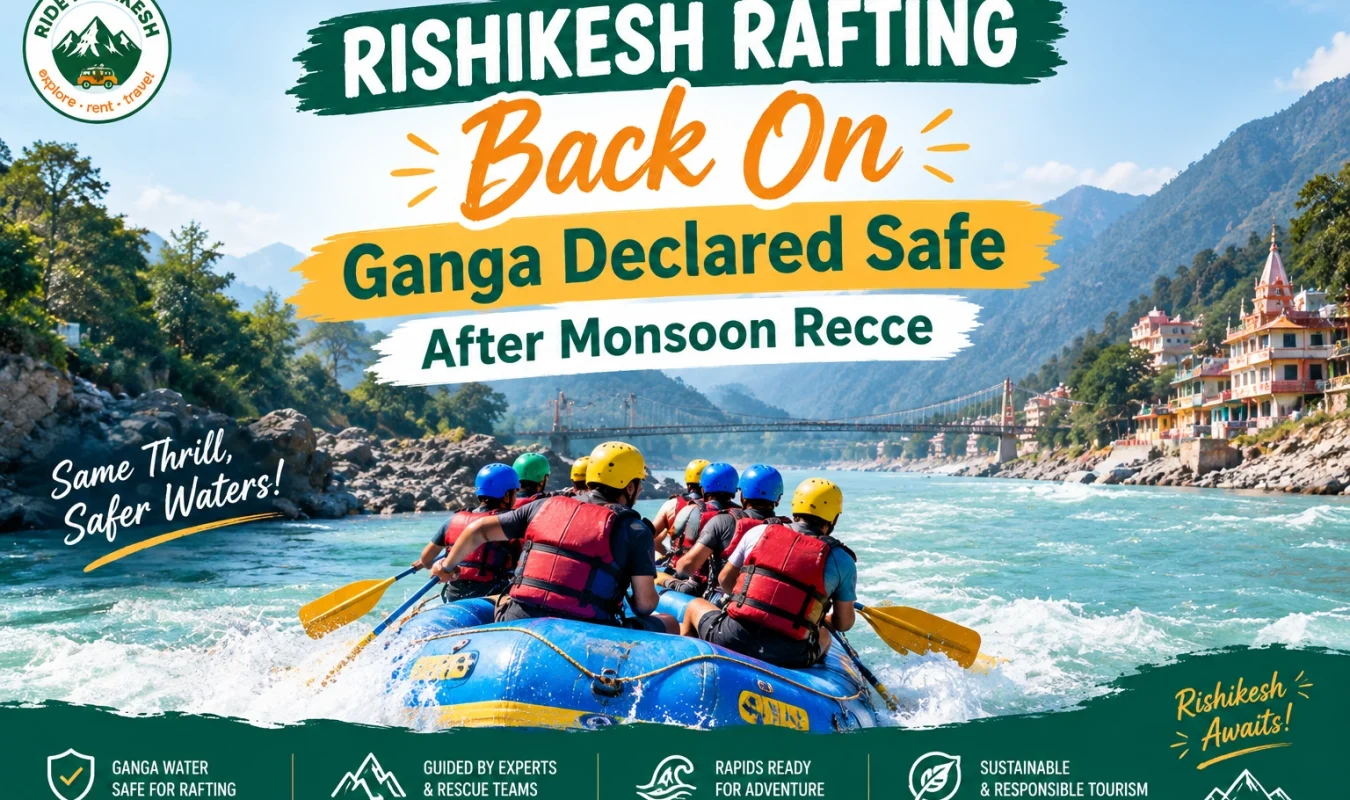



Rishikesh rafting is back on after the annual monsoon suspension, and the Ganga has been declared fully suitable for rafting following a formal joint river inspection. This post covers what the recce found, which stretches are open, how to plan your trip now, what to carry, and the safety basics that apply even more carefully in the first weeks after the monsoon season. If you’re planning a Rishikesh rafting trip in late September or October 2026, here’s everything you need to know before you book.
Latest Update : Ganga Declared Safe After Joint Monsoon Recce
What happened:
- A joint inspection team covered approximately 25 km of the Ganga from Marine Drive to Kharasrot (Munikireti) using 5 rafts and 15 kayaks
- The team included: Forest Division (Munikireti–Narendranagar), ITBP (Shivpuri), Irrigation Department (Narendranagar), and the Ganga River Rafting Management Committee
- The team inspected river flow, water levels, rapids, and potential hazard zones across the full stretch
- Key finding: Ganga’s water level is now fully suitable for rafting report submitted to higher authorities for final permission
- Rafting operations are expected to restart immediately once official approval is granted confirm with your operator on the day of booking before travelling to the put-in point
Why the delay this year: Rafting normally resumes on 1 September, marking the end of the July–August monsoon closure. In 2026, sustained early September rain kept Ganga water levels above the safe threshold for commercial operations. The recce was conducted once levels stabilised sufficiently for inspection a precaution that protects both operators and guests.
Why Late September and October Is One of the Best Times for Rafting in Rishikesh
Most people think the best rafting season is summer (May–June). It’s good, but late September through October gives you something different.
The river is fuller than it is in winter monsoon has topped up the water table and the rapids have more energy. The surrounding hills are still green from the rains. Air temperature is comfortable, 22–28°C during the day, without the dry heat of late spring. And the crowds are genuinely lower than the December–February tourist peak.
If you’ve been waiting for the right moment to do the longer stretches Marine Drive or Kaudiyala late September to October gives you better water volume than you’d get in November or December, when the river starts dropping. The rapids are livelier, which matters most on the Class III–IV stretches.
One thing to account for : early morning and late afternoon can be cold on the water in October, especially if you’re doing a multi-hour stretch. A lightweight layer you don’t mind getting wet is worth packing.
Rishikesh Rafting Routes : Which One to Choose
There are four main rafting stretches in Rishikesh, each suited to different experience levels and time available.
Brahmapuri (9 km, Class I–II)
The shortest and calmest stretch from Brahmapuri to Rishikesh town. Good for families, children above 14, and anyone who hasn’t rafted before and wants to test the water before committing to a longer run. Takes about 1.5 hours on the river.
Shivpuri (16 km, Class III)
The most popular stretch : Marine Drive to Rishikesh via Shivpuri, with several solid Class III rapids including Roller Coaster and Golf Course. This is what most people picture when they book “rafting in Rishikesh.” Duration is approximately 2–2.5 hours on water. Suitable for beginners with a guide; non-swimmers are fine in the calm sections with a properly fitted life jacket.
Marine Drive (24 km, Class III–IV)
Starts from Marine Drive village and covers the Shivpuri stretch plus additional upper rapids. Takes 3.5–4 hours on water, making it a half-day activity. The rapids are more sustained than the Shivpuri run. Requires reasonable fitness and a good guide who knows the river post-monsoon.
Kaudiyala (36 km, Class IV)
The longest and most demanding route Kaudiyala to Rishikesh. Class IV rapids including The Wall and Return to Sender. Takes most of a day. Not recommended for first-timers or non-swimmers. This stretch sees the most benefit from post-monsoon water volume the Class IV rapids are meaningfully more intense with a fuller river.
If you’re coming from Swargashram or Tapovan and need to reach a put-in point: Shivpuri is 16 km from Ram Jhula, Marine Drive is 25 km. A point-to-point drop from RideRishikesh (₹100–300) gets you to the put-in without leaving your bike somewhere along the river road message us the morning of and we’ll sort it.
How to Plan a Rishikesh Rafting Trip : Short Checklist
Choose your route based on experience level and time available. First-timer with 2 hours → Shivpuri. More time and some experience → Marine Drive. Full day and physically fit → Kaudiyala.
Pick a registered operator. This matters most in the first weeks after monsoon reopening. Registered operators have valid safety certifications, trained guides who know river conditions, and quality life jackets and helmets. Don’t book with a roadside tout who can’t show you their DMAI (District Mountaineering Association of India) registration or equivalent. Ask to see the equipment before you get in a raft.
Confirm operations on the day. Until official permission has been formally issued following the recce, call your operator the morning of your trip to confirm they’re running. Water levels can change overnight reputable operators will tell you honestly if it’s not a good day.
Reach the put-in point on time. Briefings happen before launch. Most operators ask you to arrive at least 20–30 minutes before departure. Late arrivals miss the safety briefing reputable operators will not let you skip it.
What to carry:
- Change of clothes in a dry bag or left at your guesthouse (you will get wet)
- Secured sandals or water shoes nothing loose that comes off in the water
- Sunscreen applied before you arrive (waterproof if possible)
- A small amount of cash only no valuables on the river
- Water bottle for the bank sections
What not to carry on the raft:
- Phone, camera, or any electronics unless in a waterproof case that is physically secured to you
- Heavy jewellery, watches, glasses not secured with a strap
- Loose flip-flops or shoes that aren’t tied
Book a Scooty or Drop for Your Rafting Day
If you’re planning a rafting day from Rishikesh, the logistics are straightforward but worth sorting in advance. The Shivpuri and Marine Drive put-in points are 16–25 km from the main Tapovan/Swargashram area far enough that you’ll want transport sorted before the day.
At RideRishikesh, we’re based in Swargashram. A scooty rental in Rishikesh (₹500/day) gives you the flexibility to explore the river road independently, stop at viewpoints, and handle both the morning put-in and afternoon pickup at your own pace. Or, if you’d rather leave your vehicle somewhere safe, our drop service gets you to Shivpuri or Marine Drive directly.
Ready to sort the transport for your rafting day? Message us on WhatsApp and we’ll confirm what’s available.
Note: We've put this together from the best sources we could find, but river conditions and operational status can change day to day. Always confirm with your rafting operator on the morning of your trip before heading out.
Frequently Asked Questions
Is rafting open in Rishikesh right now?
Rafting in Rishikesh is back on following a joint river recce in which the Ganga was declared fully suitable for operations. The recce was conducted by Forest Division (Munikireti–Narendranagar), ITBP (Shivpuri), the Irrigation Department (Narendranagar), and the Ganga River Rafting Management Committee, covering 25 km from Marine Drive to Kharasrot. Final operational permission is issued by higher authorities after the recce report confirm with your specific operator on the morning of your trip, as resumption is immediate once approval is granted.
Is the Ganga safe for rafting after the monsoon recce?
The joint inspection team found the Ganga’s water level fully suitable for commercial rafting after the monsoon delay. The recce used 5 rafts and 15 kayaks to inspect river flow, water levels, and rapid conditions across the full operational stretch. “Fully suitable” is the official finding though conditions on the river can change after overnight rain, so always check with your operator on the day.
Why was rafting delayed in September 2026?
Rafting in Rishikesh normally resumes on 1 September after the July–August monsoon closure. In 2026, sustained early September rainfall kept the Ganga’s water levels above the threshold for safe commercial operations. The joint recce was conducted once levels stabilised, and the finding of “fully suitable” conditions triggers the process for resuming operations.
Which rafting routes are open after monsoon?
All four main stretches : Brahmapuri (9 km), Shivpuri (16 km), Marine Drive (24 km), and Kaudiyala (36 km) are covered by the recce inspection from Marine Drive to Kharasrot. The exact stretches available from any given operator depend on their registration and the specific permission issued. Confirm with your chosen operator which routes they’re running on your date.
Is rafting in Rishikesh safe for non-swimmers?
Yes, for the Brahmapuri and Shivpuri stretches, with a properly fitted life jacket and a trained guide. Life jackets are mandatory on all registered operators’ rafts a properly fitted one keeps you afloat without active swimming. Tell your operator you’re a non-swimmer before boarding; they’ll position you in the raft accordingly and brief you specifically on what to do if you go in. The Marine Drive and Kaudiyala stretches are better attempted after you’ve done the shorter run first.
What should I wear for rafting in Rishikesh?
Light clothing you don’t mind getting completely wet shorts and a t-shirt work well in September–October. Avoid jeans (heavy when wet and restricting). Wear secured sandals, water shoes, or trainers that are properly laced nothing loose. A thin rashguard or synthetic layer is useful in October when the water is cooler. Leave everything valuable at your guesthouse.
What safety gear does a registered rafting operator provide?
All registered operators must provide a properly fitted life jacket and a helmet for each person. A trained guide who holds a recognised water sports certification steers the raft and manages safety throughout. Do not board any raft where the life jacket doesn’t fit correctly or where the operator skips the pre-launch safety briefing these are non-negotiable markers of whether the operator takes safety seriously.
What is the best time for rafting in Rishikesh after monsoon?
Late September through October is excellent the river is fuller than winter, the rapids are more active, and the weather is comfortable. November and December are also popular but the river drops progressively, reducing the intensity of the longer stretches. The official season runs from 1 September to 30 June; July and August are always closed regardless of water conditions.